Main question
How did relations between France and the United Kingdom evolve during the French Revolution, and what factors contributed to the rising tensions that led to war between the two nations?
I/ England and France on the Eve of Revolution: Two Opposite Political Systems
II/ Military Engagements Between Britain and Revolutionary France
III/ Outcomes of the Conflict: Naval Dominance and Long-Term Impacts
Documents
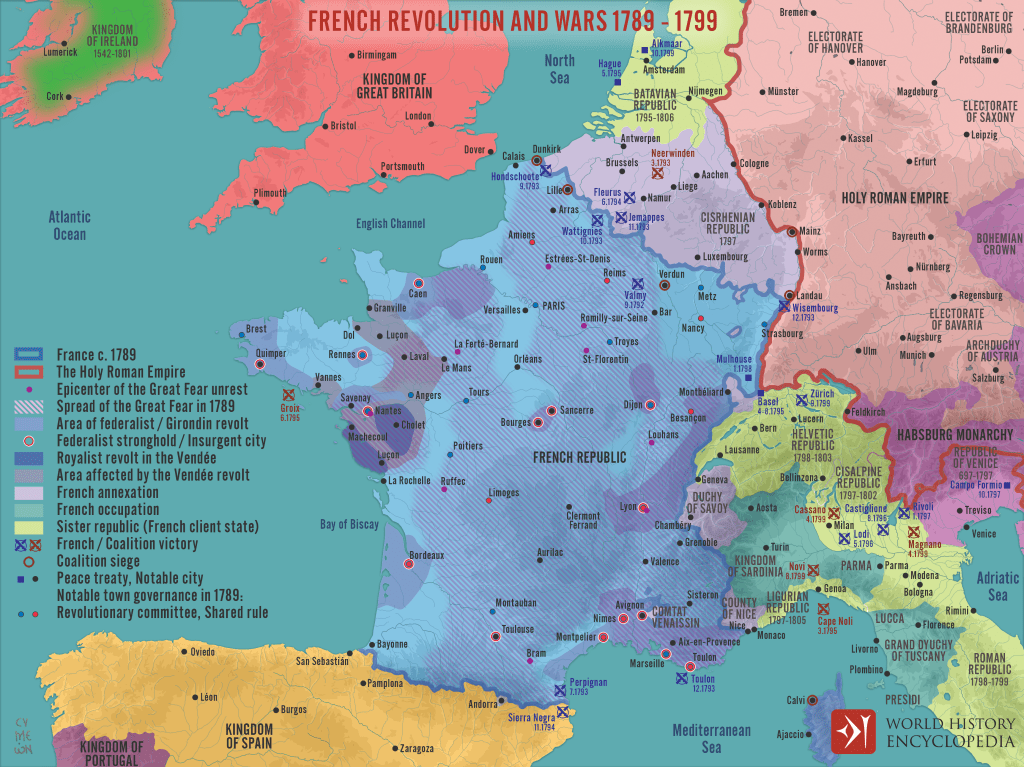
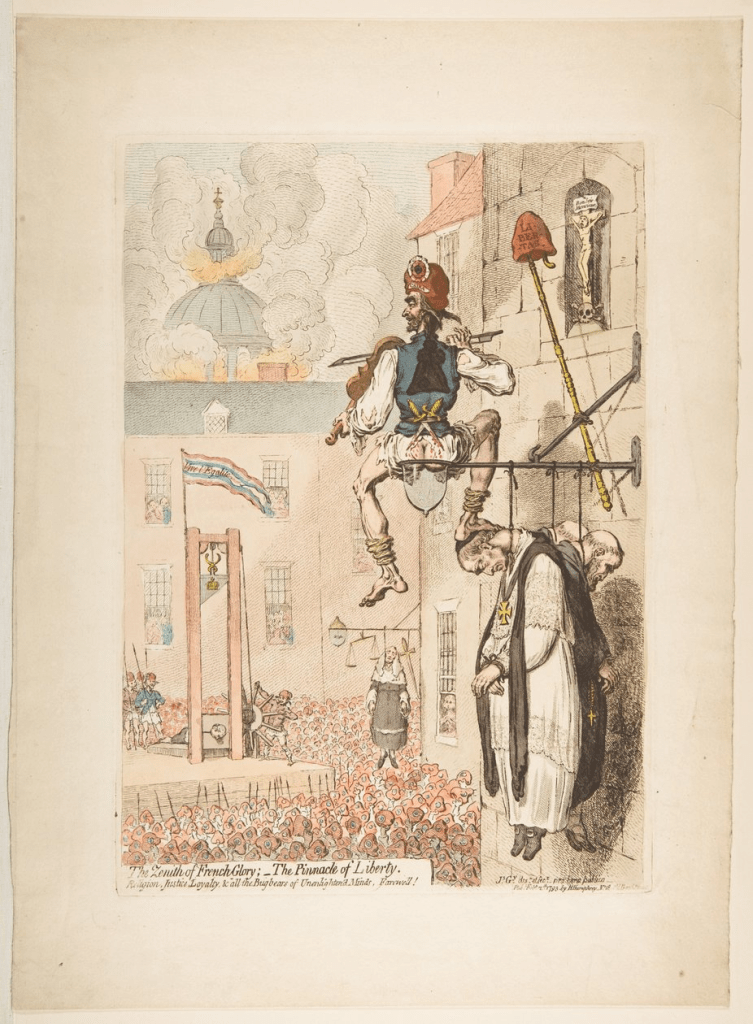
The Zenith of French Glory, engraving by James Gillray, 1793, New College, Oxford.)
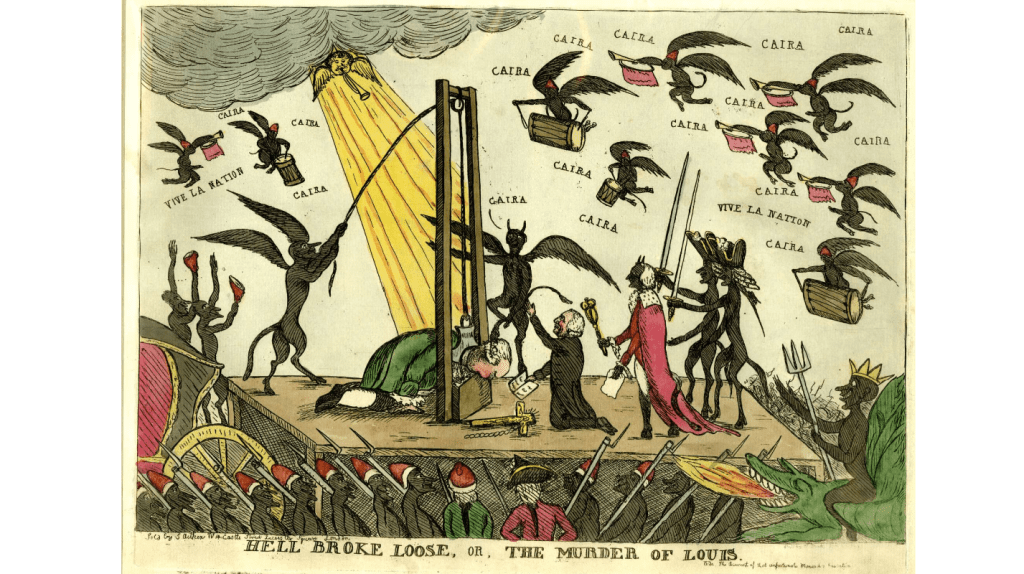
Word box
- French Revolution: The revolution in France (1789–1799) aiming for liberty, equality, and fraternity.
- Liberty, Equality, Fraternity: Core ideas of the French Revolution: individual freedom, equality before the law, and social solidarity.
- Seditious Meetings Act: British law (1795) limiting radical political gatherings.
- Treasonable Practices Act: British law punishing acts considered treason against the king or government.
- Thomas Paine: British writer who supported the French Revolution and defended people’s right to overthrow oppressive governments.
- Romantic Poets: Poets like Wordsworth and Coleridge who celebrated human freedom and moral progress.
- Jacobins / Reign of Terror: Radical French group; period of extreme violence after 1793.
- First Coalition: Military alliance (1793) of Britain, Austria, Prussia, and Spain against revolutionary France.
- Society for Constitutional Information & London Corresponding Society: British reform groups calling for universal male suffrage, political reform, and civil liberties.
- French Revolutionary Wars: Military conflicts between revolutionary France and European powers, including Britain.
- Naval Supremacy: Britain’s control of the seas, crucial for trade and colonial power.
- Battle of the Nile / Battle of Trafalgar: Key British naval victories securing control of seas and preventing French invasions.
- Napoleonic Wars: Wars (1803–1815) against Napoleon, continuing the conflict with France after the Revolution.
- Treaty of Campo Formio: 1797 treaty ending the First Coalition with Austria, but Britain continued fighting.
- Conservative Domestic Policies: British government measures to limit revolutionary ideas: surveillance, arrests, and delayed reforms.
 Picard HG/HGGSP