I. California, a developed state with high consumption
II. A state exposed to risks and climate change
III. Differentiated responses and vision for the future
Documents
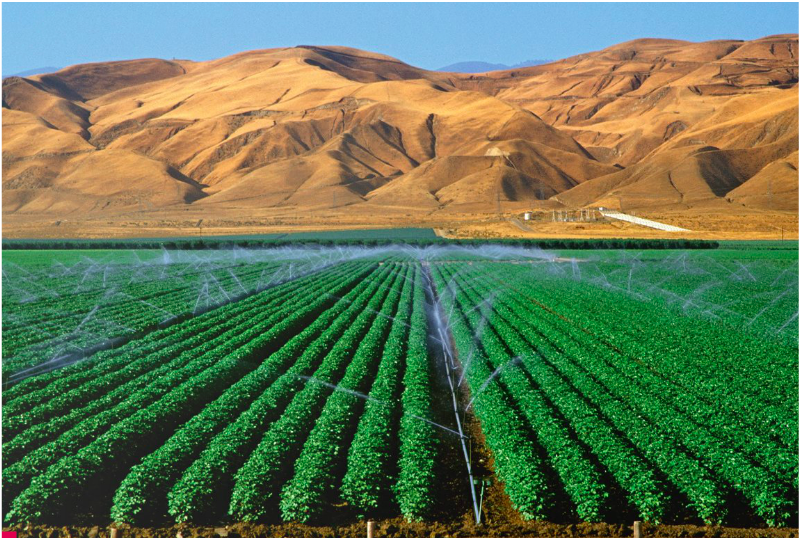
Irrigated cotton-fields in the Valley of Central California


Word box
- California – A highly populated and economically powerful U.S. state with nearly 40 million people in 2025.
- GDP (Gross Domestic Product) – The total value of goods and services produced; California’s GDP is over 4 trillion dollars.
- Pacific Coast Cities – Major cities like Los Angeles, San Francisco, San Diego, and San Jose; popular for jobs, climate, and culture.
- Coastal Risks – Threats such as sea-level rise, flooding, and erosion affecting cities along the ocean.
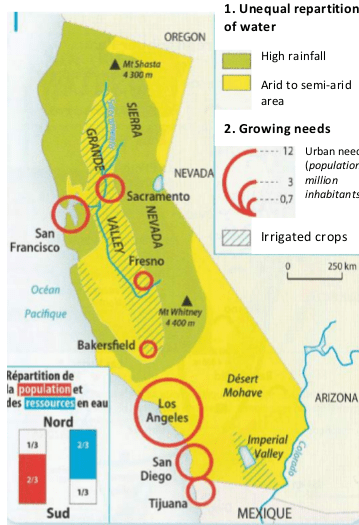
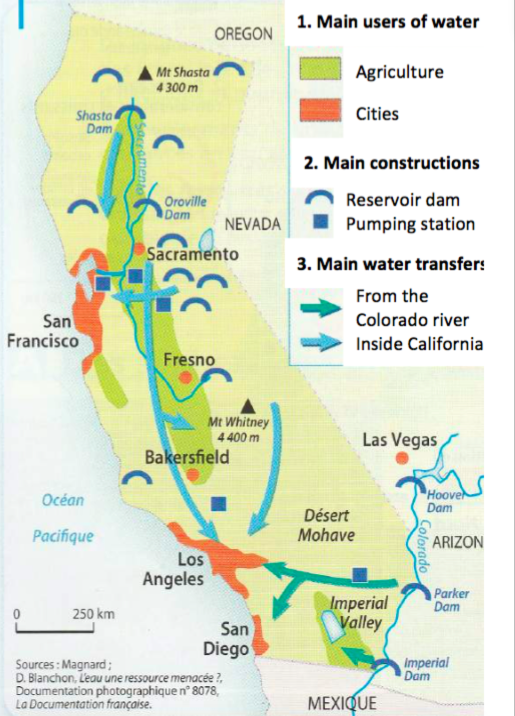
- Central Valley – Major agricultural region producing almonds, grapes, lettuce, and other crops; heavily irrigated.
- Climate Change Impacts – Includes wildfires, extreme heat waves, droughts, and risks to tourism and agriculture.
- Energy Production and Consumption – California generates solar and hydroelectric power but consumes much energy, especially in summer for air conditioning.
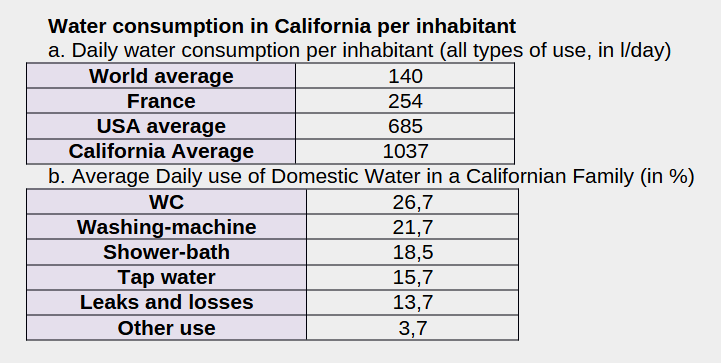
- Consumer Lifestyle – Large homes, private pools, heavy car use, shopping, dining, and entertainment, reflecting high consumption.
- Wildfires – Frequent and destructive fires, such as the 2020 August Complex Fire (over 1 million acres burned).
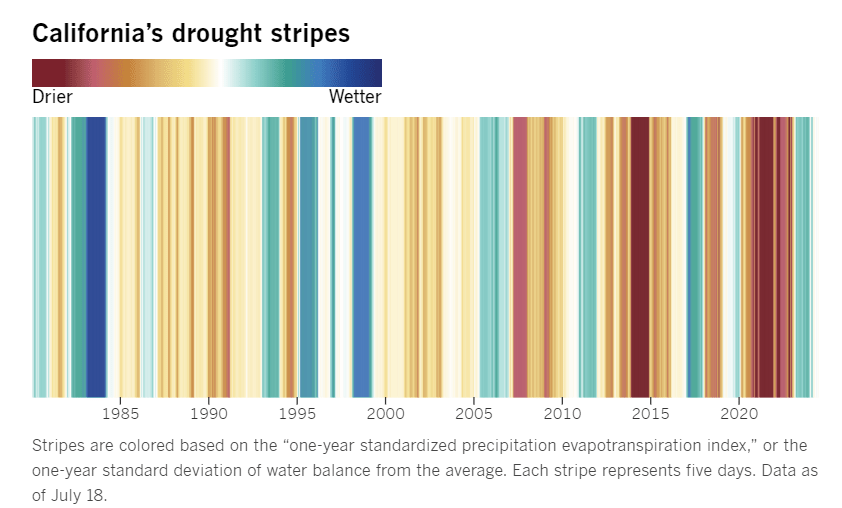
- Drought and Water Overuse – Causes land subsidence in the Central Valley and water shortages in reservoirs like Lake Oroville.
- Air Pollution – Caused by vehicle emissions, industry, wildfires, and agricultural runoff; affects health and ecosystems.
- Renewable Energy – Solar, wind, and geothermal power; over 35% of California’s electricity comes from renewables.
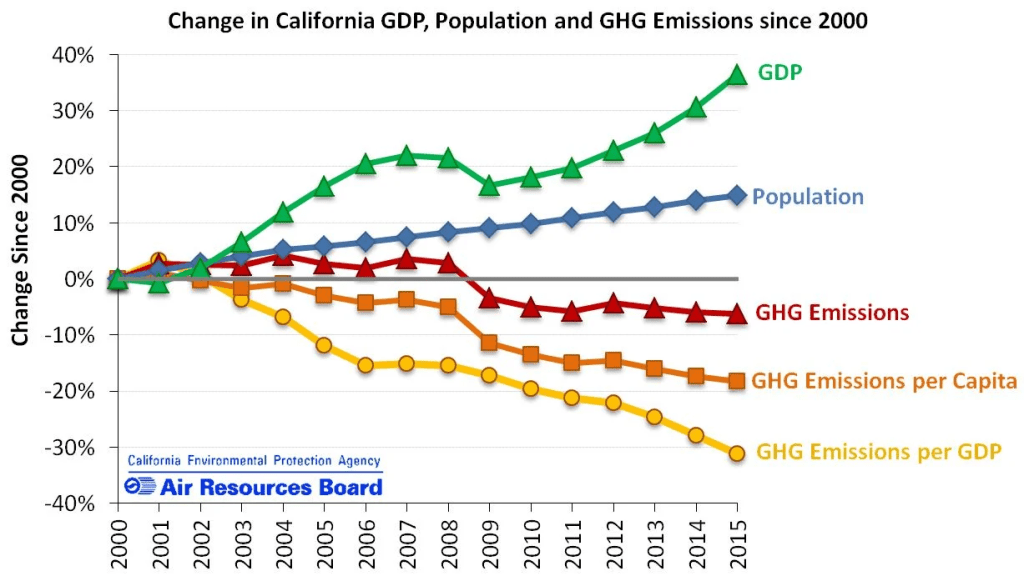
- Carbon Neutrality Goal – California aims to reach zero net emissions by 2045 and cut vehicle emissions by 40% by 2030.
- Sustainable Farming – Practices like cover cropping, drip irrigation, and reducing pesticides to protect soil and water.
- Resilience Measures – Strategies to adapt to climate change: levees, dune restoration, managed retreat, green roofs, shaded streets.
 Picard HG/HGGSP